How to Help Your Kid to Drink More Water
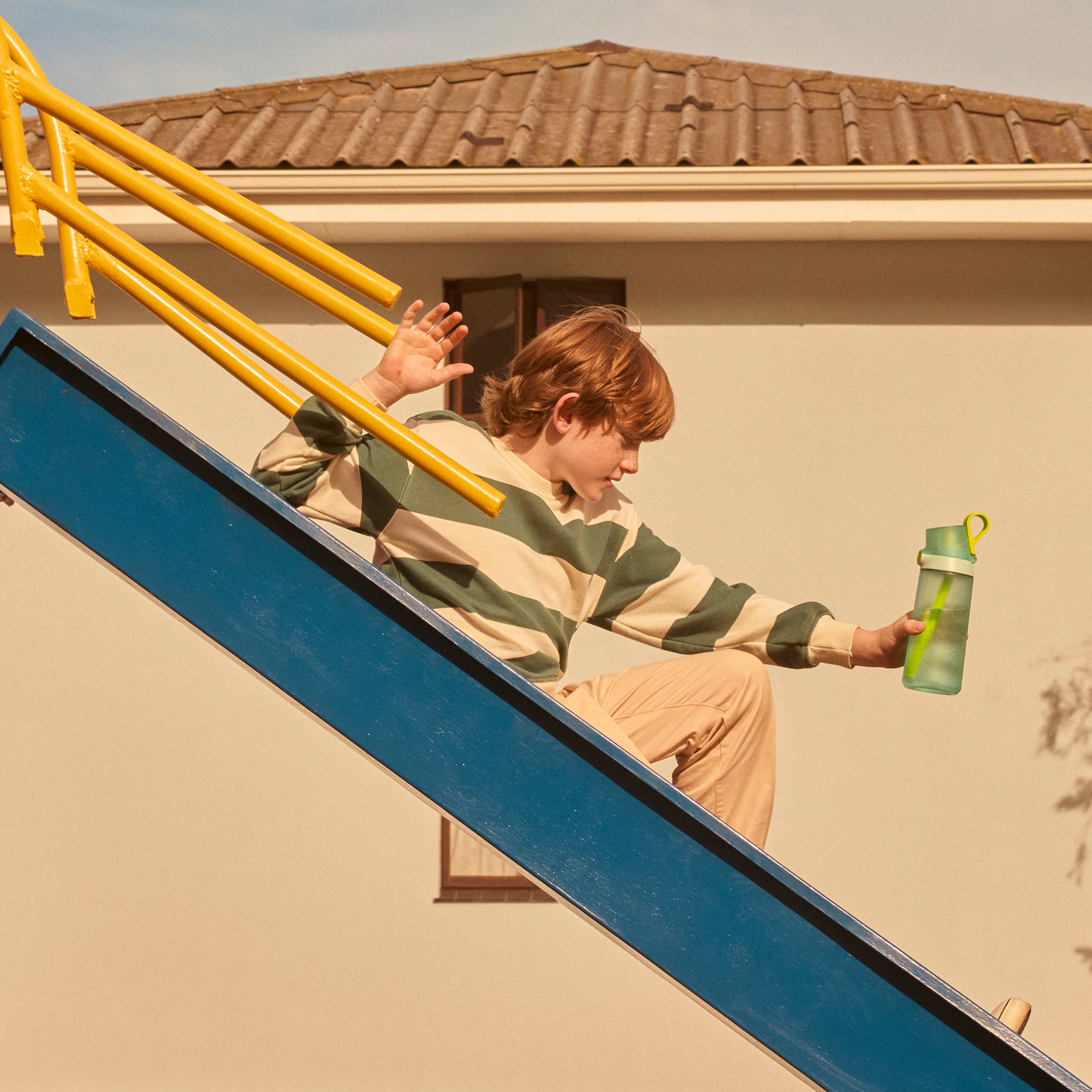
If your child treats water like a chore, you're in good company. Kids don't need a lecture about hydration. They need water that's easy, enjoyable, fun to drink, and can quickly become part of their day. Here's how to get there.
In short: make it easy to reach, make it fun, give it some flavour without the sugar, and tie it to moments that already happen.
How much water does your child need?
Needs rise with age. The figures below are EFSA's adequate intakes (opens in a new tab) for total water, which includes every drink plus the water in food, so soup, fruit and vegetable count too.
Daily water needs rise from 1.3 L at ages 2 to 3 to 2.1 L for boys aged 9 to 13
Total water from drinks and food, litres a day, at moderate temperature and activity
For one to two-year-olds, EFSA's range (opens in a new tab) is 1.1 to 1.2 litres. Roughly four-fifths of each total usually comes from drinks. That works out at about 1.3 litres of drinks for a 4 to 8-year-old, and about 1.5 to 1.7 litres for a 9 to 13-year-old.
These numbers assume moderate temperatures and activity. A hot day or a football match could potentially mean more intake.
Why water gets passed over
It's rarely stubbornness. Usually it's one of three things:
- Sweet drinks set the bar high. Next to squash or cola, plain water has nothing to offer. Kids who are used to sweetness often read "no flavour" as "no thanks".
- Water isn't in sight. Kids reach for what's in front of them, and a bottle at the bottom of a school bag doesn't get a look-in.
- Nobody's drinking it with them. Children copy what they see, so a glass in your hand does more than a reminder.
Make water an easy choice
Start with the setup, because it's the quickest win.
- Give them their own bottle. Let them choose it, and check they can open it themselves. A bottle they like is a bottle they carry.
- Put a jug where they'll see it. A cold jug on the table or a low fridge shelf keeps water within their reach.
- Fill it together. A two-minute morning job gives them ownership.
What to look for in a kids' water bottle
A bottle is the one thing your child carries every day, so it's worth getting right. Six things make the difference:
- A lid that won't leak in a school bag
- Easy to open, light to carry
- Material: plastic or steel
- Easy to clean
- A bottle they love
A lid that won't leak in a school bag
The first thing most parents check, and the most common complaint when it goes wrong. Look for a lid that stays shut even when the bag is tipped or dropped.
Easy to open, light to carry
One-handed or push-button lids suit small hands, and nothing too stiff, so your child can open it without asking for help. Weight matters too, because a heavy bottle is harder to carry.
Material: plastic or steel
BPA-free plastic such as Tritan is light. Steel keeps water cold for longer but weighs more, so it's a trade-off between weight and chill.
Easy to clean
Look for dishwasher-safe parts, a wide opening and no hidden corners. A bottle that's simple to wash is one that gets used again the next day.
A bottle they love
Kids drink more from a bottle they chose themselves: the colour, the design, a bit of novelty. Shortlist two or three bottles that cover the points above, then let your child make the final choice.
Turn water drinking into a fun activity
What works changes with age, so here's a starting menu. Pick one idea, try it for a week and see what lands:
| Age | Try this |
|---|---|
| Toddlers | A cup with a straw, or ice cubes with a piece of frozen fruit inside to chase around the cup |
| Primary school | A colouring chart with one square per finished bottle, or a "who can finish theirs first" game at lunch |
| Older kids and teens | Their own bottle, plus a "flavour of the week" they pick themselves |
Whatever you try, drink along with them. Children copy what they see, and a glass in your hand makes water the normal choice at the table.
Let them take the lead
Kids drink more of what they've had a say in. Hand over a few small decisions and watch them drink more water:
- Let them choose the flavour. Put out two or three ingredients and let them build the jug.
- Let them run the chart. A tick or sticker for each finished bottle makes progress visible.
- Let them be the host. At dinner, the job of filling everyone's glass is theirs.
Give it flavour, without the sugar
NHS guidance caps free sugars at 19g a day for ages 4 to 6 and 24g for ages 7 to 10 (opens in a new tab). A 330 ml can of cola has around 35g (opens in a new tab).
That's a big reason to make flavoured water the everyday drink. It's easy to do at home:
- Frozen berry ice cubes. They colour the glass and add flavour slowly as they melt.
- Fruit and herb combinations. Strawberry and basil, orange slice and rosemary, or cucumber and mint. Flavours beyond just fruit work well, and herbs are a natural way to add them.
- Still or sparkling water. Let them try both. Plain sparkling water often goes down well with kids who like fizz. Always check bottled fizzy water for any sugar content.
School days and sports days
Busy days are where the habit slips, so plan ahead for them:
- School: pack the bottle the night before, filled and chilled if you can, so it goes in the bag with everything else.
- Before sport: a glass before they head out, and the bottle in the kit bag.
- After sport: the first thing on offer when they come off the pitch is water, before any snack.
- Hot days: needs rise with heat and activity, so offer extra and keep it cold.
Build water into the day
Four small moments are enough to make water the easy choice:
Four small moments make water the easy choice
- BreakfastA glass at the table before they leave
- SchoolTheir own bottle, packed in the bag
- After schoolA jug within reach when they get home
- DinnerWater on the table for the whole family
Anchor each one to something that already happens, and you won't need reminders. Once the four moments feel automatic, a child who has water at breakfast, at school, after school and at dinner has covered most of the day without anyone counting glasses.